


Steamed Rice Cake (Banh Beo Chen): A Culinary Masterpiece from Central Vietnam
Have you ever encountered a dish so captivating, so perfectly balanced in flavor and texture, that it leaves an indelible mark on your culinary memory? For our family, that dish is the exquisite steamed rice cake (Banh Beo Chen). Shortly after arriving in vibrant Ho Chi Minh City, my husband, eager to introduce us to authentic Vietnamese cuisine, led us to Bun Bo Hue 3A3 Restaurant. Unfamiliar with the Vietnamese language and its food, we instinctively looked at photos on the menu to place our orders. A small, delicate steamed rice cake resembling our familiar Singaporean Chwee Kueh caught our eye – it seemed like a safe, delicious bet.
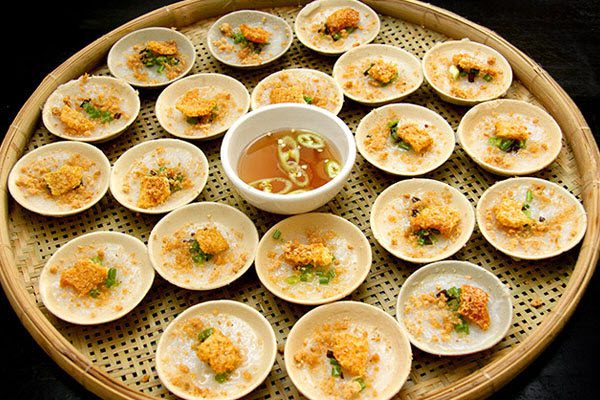
What arrived at our table, however, was far more enchanting than we expected: tiny, translucent discs nestled in individual “chen” (small, condiment-sized bowls), accompanied by a simple yet profound light fish sauce. It was love at first bite! The delicate chewiness of the cake, the savory pop of dried shrimp, the fragrant scallion oil, and the satisfying crunch of fried pork rind, all brought together by that perfect dipping sauce, created an explosion of textures and flavors. From that day forward, this steamed rice cake (Banh Beo Chen) became our son’s absolute favorite food in Ho Chi Minh City, a testament to its irresistible charm.
Originating from the central regions of Vietnam, particularly the imperial city of Hue, Banh Beo is more than just a snack; it’s a testament to the sophisticated culinary traditions of a bygone era. This article will take you on a deep dive into the world of this beloved Vietnamese steamed rice cake – exploring its imperial history, understanding its meticulous preparation, unraveling the secrets of its perfect texture and flavors, and providing you with an authentic recipe to recreate this Vietnamese delight in your own kitchen. Get ready to savor one of Vietnam’s most cherished dishes.
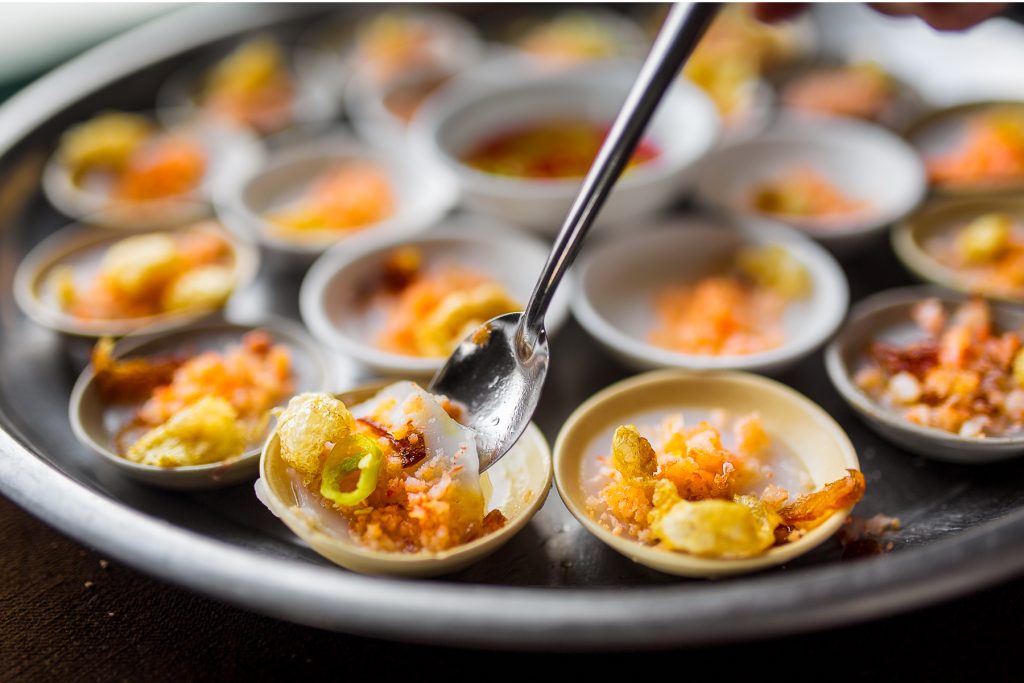
The Humble Origins: Where Steamed Rice Cake (Banh Beo Chen) Comes From
Banh Beo finds its spiritual and historical home in Hue, the former imperial capital of Vietnam. Hue’s cuisine is renowned for its elegance, meticulous presentation, and balanced flavors – a direct reflection of its royal past. Unlike the bolder, spicier flavors of the South or the more subtle notes of the North, Hue cuisine is characterized by its refined techniques and delicate portions, often presented in intricate ways. The steamed rice cake (Banh Beo Chen) perfectly embodies these characteristics.
Historically, the abundance of rice in Vietnam naturally led to the development of countless rice-based dishes. Banh Beo, with its simple yet ingenious use of rice flour, emerged as a staple. It evolved from a common peasant dish into a royal delicacy, particularly favored for its small, elegant servings that fit the aristocratic palate. These humble steamed rice cakes have a rich story to tell.
While the Banh Beo Hue (or Banh Beo Chen) served in small cups is the most famous rendition, regional variations exist throughout Vietnam:
- Banh Beo Hue (Central Vietnam): This is the quintessential steamed rice cake (Banh Beo Chen). Each individual cake is steamed in its own small ceramic “chen” (bowl), creating a perfectly rounded, delicate disc. Toppings traditionally include fine dried shrimp floss (tôm chấy), crispy pork cracklings or croutons (tóp mỡ or bánh mì chiên giòn), and a drizzle of fragrant scallion oil (mỡ hành). The accompanying dipping sauce, nước mắm chấm, is unique, often made with a subtle sweetness and infused with the very broth used to cook the shrimp, giving it an unparalleled depth of flavor.
- Banh Beo from Quang Nam / Da Nang (Central Coast): Slightly different from its Hue cousin, this steamed rice cake might be served larger, often stacked on a “dia” (plate) rather than in individual cups. The texture can be a bit thicker, and while it shares many core toppings, it might sometimes feature a different type of crisp fried dough or a richer, sweeter dipping sauce more characteristic of the region.
- Banh Beo Mien Bac (Northern Vietnam): As you noted, Northern versions of this Vietnamese steamed rice cake sometimes incorporate a swipe of savory mung bean paste onto the cake before other toppings are added, offering a different textural and flavor dimension. The dipping sauces can also vary, perhaps leaning toward a more savory or sour profile.
These regional nuances highlight the versatility of the humble steamed rice cake, but it is the elegance and delicate balance of steamed rice cake (Banh Beo Chen) from Hue that truly captures the hearts of food lovers worldwide.
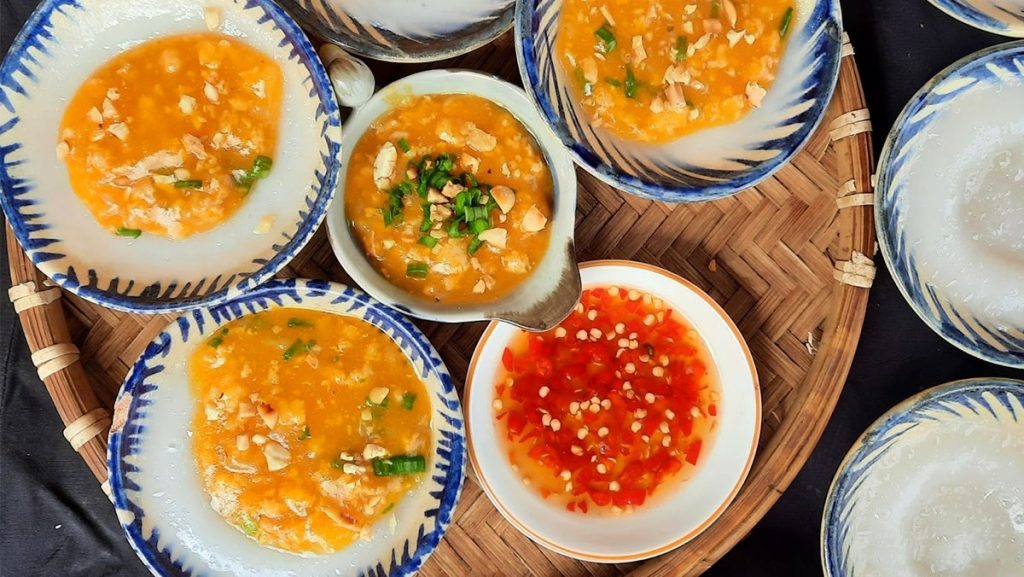
The Diverse Family of Vietnamese Steamed Rice Cakes
Beyond the beloved Banh Beo Chen, Vietnam boasts a rich tapestry of other steamed rice cakes, each with its unique characteristics, toppings, and regional specialties. Understanding these variations helps appreciate the ingenuity and versatility of Vietnamese culinary traditions, all rooted in the simple grain of rice.
- Banh Nam: Another popular steamed rice cake from Hue and Central Vietnam. Unlike Banh Beo’s individual cups, Banh Nam is a flat, rectangular steamed rice cake, often wrapped in banana leaves. It typically features a delicate shrimp and pork paste filling spread thinly over the rice flour dough, creating a soft, tender texture and a savory flavor. It’s also served with nuoc mam cham.
- Banh Loc: A chewy, translucent steamed rice cake often associated with Hue. What sets Banh Loc apart is its primary use of tapioca flour, which gives it a distinct elasticity and transparency. It’s usually filled with marinated shrimp and sometimes pork belly, and can be either wrapped in banana leaves (Banh Loc Goi) or served unwrapped (Banh Loc Tran). The dipping sauce is key, offering a spicy, savory, and tangy complement.
- Banh Uot: Translating to “wet cake,” Banh Uot is a very thin, broad sheet of steamed rice cake, akin to a delicate noodle or crepe. It’s often served plain, rolled, or folded, and typically accompanied by grilled pork (nem lui), fried shallots, herbs, and a savory dipping sauce. Its light, refreshing quality makes it a versatile accompaniment to many dishes.
- Banh Cuon: While sometimes pan-fried after steaming, Banh Cuon primarily refers to thin, delicate, steamed rice paper rolls. Originating from Northern Vietnam, particularly Hanoi, these steamed rice cakes are filled with seasoned ground pork and wood ear mushrooms. They are typically served with fried shallots, fresh herbs, slices of Vietnamese ham (cha lua), and a light, flavorful dipping sauce (nuoc cham).
These varied forms demonstrate the mastery of Vietnamese cooks in transforming basic rice flour into an incredible array of textures and tastes, solidifying the steamed rice cake as a fundamental pillar of Vietnamese gastronomy.
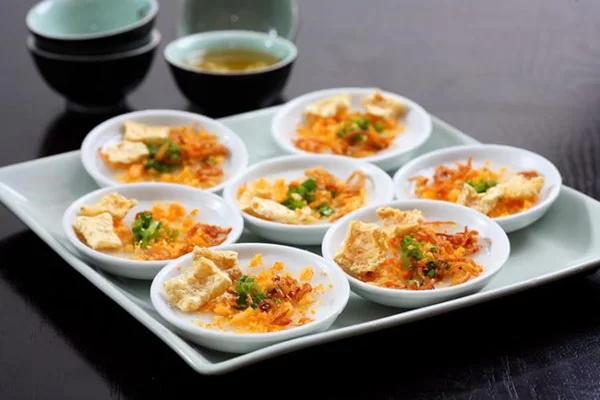
What Makes Steamed Rice Cake (Banh Beo Chen) So Special?
The allure of steamed rice cake (Banh Beo Chen) lies in a symphony of textures and flavors that come together in a seemingly simple dish.
- The Delicate Cake: The base of Banh Beo is its unique texture. It’s light, translucent, and incredibly smooth, with a subtle chewiness that gives it body without being heavy. Achieving this perfect texture is an art, a result of precise flour-to-water ratios and meticulous steaming.
- The Flavor Medley: Each topping contributes a distinct element. The dried shrimp floss provides a concentrated umami and savory crunch. The crispy pork rind (or fried croutons) adds a delightful crispness and rich, savory fat. The scallion oil brings a fresh, aromatic counterpoint, its vibrant green color contrasting beautifully with the pale white cakes.
- The Dipping Sauce (Nuoc Mam Cham): This is arguably the soul of the dish. Unlike generic fish sauce, the Banh Beo dipping sauce is a light, subtly sweet, savory, and tangy concoction, often enhanced by the very broth used to cook the shrimp. Its delicate nature complements the Banh Beo without overpowering it, instead elevating every bite.
- The Presentation: Served in charming individual “chen,” Banh Beo Chen is inherently appealing. This presentation encourages communal dining, allowing each person to pick a bowl and experience the full, fresh flavor in every bite. It’s not just food; it’s an experience, an edible art form that fits perfectly into Hue’s refined culinary heritage.
- Cultural Significance: Banh Beo Chen is more than just food; it’s a social and cultural staple. It’s often enjoyed as a light meal, a hearty snack, or as an appetizer among friends and family. It embodies the Vietnamese philosophy of balancing flavors and textures, making it an incredibly satisfying and surprisingly complex dish born from humble ingredients. Being naturally gluten-free due to its rice flour base, this steamed rice cake is a delicious option for many dietary needs.
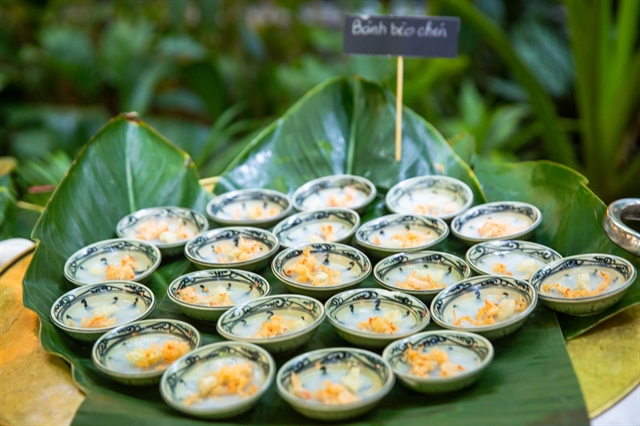
Decoding the Ingredients: The Building Blocks of Authentic Banh Beo Chen
Crafting authentic steamed rice cake (Banh Beo Chen) requires attention to detail, starting with the quality and preparation of its core ingredients.
The Batter – The Foundation of Delight:
- Rice Flour: This is the primary ingredient. It’s crucial to use good quality regular white rice flour, not glutinous rice flour, to achieve the desired delicate, non-sticky texture. The starch content in the flour dictates the cake’s final consistency.
- Tapioca Flour: This is the magic ingredient that gives Banh Beo its signature translucent appearance and delightful chewiness. Too little, and the cakes might be brittle; too much, and they become overly gummy. Precision is key.
- Water & Salt: Essential for hydrating the flours and seasoning the cake base. The exact amount of water can vary slightly based on flour brand and humidity, requiring a keen eye for consistency.
- Oil: A small amount of neutral cooking oil in the batter ensures smoothness and helps the cakes release easily from their molds after steaming.
- The “Discard Water” Technique (Nước trong bỏ, nước đục lấy): This is a hallmark of authentic Banh Beo preparation and a secret to its perfect texture and purity of flavor. After mixing the rice and tapioca flour with water and letting it settle, a layer of clear starch water forms on top. This clear water, which often carries the “old flour” smell and some impurities, is carefully decanted and discarded. It is then replaced with an equal amount of fresh, clean water. This seemingly simple step is vital: it eliminates any “funky” or stale odors from the flour, ensures a truly pristine flavor, and contributes significantly to the translucent, tender texture of the final steamed rice cake. It’s a testament to the Vietnamese culinary philosophy of refining ingredients for optimal taste.
The Toppings – Layers of Flavor and Texture:
- Dried Shrimp Floss (Tôm Chay or Tôm Khô): This savory topping is made from dried shrimp, pounded or processed into a fine, fluffy floss. Its concentrated umami flavor and slightly coarse texture provide a fantastic contrast to the smooth steamed rice cake. It’s often lightly seasoned with pepper.
- Crispy Pork Rind / Croutons (Tóp Mỡ or Bánh Mì Chiên Giòn): Essential for that satisfying crunch. Crispy rendered pork fat (tóp mỡ) provides a rich, savory burst, while small fried bread croutons (bánh mì chiên giòn) offer a lighter crispness. Both add a crucial textural element to the steamed rice cake.
- Scallion Oil (Mỡ Hành): Fresh scallions finely chopped and sizzled with hot oil. This simple yet aromatic topping adds a beautiful green color, a fresh oniony note, and a luscious mouthfeel, completing the visual and sensory appeal of the Banh Beo Chen.
- Fried Shallots (Hành Phi – Optional but Recommended): Thinly sliced shallots fried until golden brown and crispy. They offer a sweet, caramelized onion flavor and an additional layer of crunch, often sprinkled on top alongside the other elements.
The Dipping Sauce (Nước Mắm Chấm) – The Soul of Banh Beo:
- Prawn Broth: This is what truly sets Banh Beo dipping sauce apart. Made from simmering the leftover shrimp shells, it infuses the sauce with a delicate seafood essence, adding incredible depth and umami that complements the shrimp floss perfectly.
- High-Quality Fish Sauce (Nước Mắm): The backbone of the dip. Using a good quality Vietnamese fish sauce is paramount for authentic flavor.
- Sugar: Balances the saltiness of the fish sauce and the tang of lime (if used), providing a crucial sweetness.
- Fresh Red Chilies: Thinly sliced, these add a vibrant kick and visual appeal. The amount can be adjusted to preference.
- Garlic: Finely minced, it contributes a pungent, aromatic layer.
- Lime Juice (Optional, but often used): A squeeze of fresh lime juice can add a bright, acidic note, cutting through the richness and enhancing the flavors.
The Art of Preparation: A Step-by-Step Guide to Perfect Steamed Rice Cake (Banh Beo Chen)
Recreating steamed rice cake (Banh Beo Chen) at home is a rewarding process, blending simple ingredients with careful technique. Follow these steps for delicious results.
Yields: Approximately 25-30 cakes Prep time: 2.5 hours (including resting time) Cook time: 1 hour
Ingredients:
Batter:
- 1 cup (120g) rice flour
- 1 tablespoon (8g) tapioca flour
- 2 cups (480ml) water
- ½ teaspoon salt
- 1 teaspoon neutral oil (e.g., canola, vegetable)
Prawn Topping:
- 400g prawns with shells on
- Dash of black pepper
Crispy Pork Rind (Tóp Mỡ):
- 200g pork fat/rind, diced into small cubes
Scallion Oil (Mỡ Hành):
- 1 bunch of scallions, thinly sliced
- Pinch of salt
- 2 tablespoons neutral oil
Fish Sauce Dip (Nước Mắm Chấm):
- 1 cup (240ml) reserved prawn broth
- 1 1/2 tablespoons quality fish sauce
- 1 1/2 tablespoons granulated sugar
- 1-2 fresh red chilies, thinly sliced
- 1 clove garlic, minced (optional)
- 1 teaspoon lime juice (optional)
Equipment:
- Small ceramic or metal condiment bowls (“chen”) – approximately 25-30
- Steamer setup (large pot with steaming rack or dedicated steamer)
- Mortar and pestle or food processor
- Small frying pan, small saucepan
Method:
1. Preparing the Batter (The Secret to Texture):
- In a large mixing bowl, combine rice flour, tapioca flour, and salt. Gradually whisk in 2 cups of water until the mixture is smooth and completely free of lumps.
- Crucial Step – Settling: Cover the bowl and let the batter settle undisturbed for at least 1 to 2 hours. During this time, the starch will sink to the bottom, leaving a clear layer of water on top.
- The “Discard Water” Technique: Carefully pour out the clear water from the top into a measuring cup. Note the exact volume, then discard this water. Replace it with the same exact amount of fresh, clean water back into the bowl with the settled batter. This step is key to a perfect steamed rice cake.
- Add the 1 teaspoon of oil to the batter and whisk thoroughly until everything is well combined again.
- Allow the batter to sit for another 30 minutes to ensure it’s fully hydrated and stable. Pro Tip: This second resting period helps the cakes steam evenly and achieve their delicate translucence.
2. Preparing the Prawn Topping (Tôm Chay):
- Shell and devein the prawns. Rinse both the prawns and their shells thoroughly.
- Bring a pot of water to a boil. Add the shelled prawns and cook for just 2-3 minutes, or until they turn pink and opaque. Remove the prawns and set aside.
- Continue to simmer the reserved prawn shells in the same water for another 5-8 minutes to create a flavorful prawn broth. Strain the broth and reserve it for the dipping sauce.
- Transfer the cooked prawns to a mortar and pestle (or use a food processor with a pulse function). Pound or pulse until the prawns are finely crushed and fluffy, resembling a floss.
- Place a small, dry frying pan on very low heat. Add the crushed shrimp. Season lightly with a dash of pepper.
- Using a spatula, constantly stir and press the shrimp against the pan for 7-10 minutes, or until the shrimp is completely dry, very light, and fluffy (like floss). Be careful not to burn it.
- Transfer the dried shrimp floss to a bowl and set aside.
3. Preparing Crispy Pork Rind (Tóp Mỡ):
- Dice the pork fat/rind into small, uniform cubes.
- In a cold pan (this helps render fat slowly), add the pork rind/fat cubes. Place on medium-low heat.
- Stir occasionally. The fat will slowly render out, and the cubes will gradually turn golden brown and crispy. This process can take 15-20 minutes.
- Once golden brown and crispy, use a slotted spoon to transfer the pork rinds to a plate lined with paper towels to drain off excess fat. The rendered pork fat can be strained and used for other cooking.
- Set aside. Note: Leftover rendered pork fat can be stored in a glass jar in the refrigerator for a couple of weeks, adding rich flavor to other dishes.
4. Preparing Scallion Oil (Mỡ Hành):
- Thinly slice the scallions. Place them in a heatproof bowl with a pinch of salt.
- In a small saucepan, heat 2 tablespoons of neutral oil over medium-high heat until it just begins to smoke lightly.
- Carefully pour the hot oil directly over the scallions in the bowl. The scallions will sizzle and turn vibrant green. Mix well and set aside.
5. Preparing Fish Sauce Dip (Nước Mắm Chấm):
- In a mixing bowl, combine the reserved prawn broth, fish sauce, sugar, thinly sliced chilies, and minced garlic (if using).
- Stir well until the sugar completely dissolves. Taste and adjust to your preference – it should be a harmonious balance of savory, sweet, and spicy. Add lime juice if desired for a touch of tang.
- Set aside. This sauce can be prepared in advance.
6. Steaming the Banh Beo (The Final Act):
- Set up your steamer. Add enough water to your steamer or wok and bring it to a rolling boil over high heat.
- Arrange your small “chen” (bowls) on the steaming rack. Lightly brush the inside of each bowl with a tiny bit of cooking oil. This prevents sticking and ensures easy removal.
- Before ladling, stir the batter again thoroughly as the starch may have settled.
- Carefully ladle the rice flour mixture into each oiled bowl. The amount depends on your preference for thickness; typically, fill about 2/3 of the bowl for thin, delicate cakes.
- Transfer the steaming rack with the filled bowls into the hot steamer. Cover tightly.
- Steam for approximately 4-6 minutes, or until the steamed rice cakes become translucent, firm, and slightly puffed in the center. The exact time may vary based on the thickness of your cakes and the heat of your steamer.
- Once steamed, carefully remove the bowls from the steamer and let them cool slightly. This cooling period is crucial for the cakes to firm up and release easily.
- Repeat the steaming process with the remaining batter, always stirring the batter before each batch.
7. Serving the Steamed Rice Cake (Banh Beo Chen):
- Arrange the cooled steamed rice cake (Banh Beo Chen) bowls on a serving tray.
- Generously top each Banh Beo with a spoonful of scallion oil, a sprinkle of dried prawn floss, and a few pieces of crispy fried pork rind.
- Just before serving, drizzle or pour a good dosage of the prepared fish sauce (nuoc mam cham) directly over the prepared Banh Beo in their individual bowls.
- To eat, use a small spoon (traditionally a small bamboo or metal spoon) to scoop the cake out from the side of the bowl, ensuring you get a little bit of every topping and the sauce in each bite. Enjoy immediately!
How to Enjoy Steamed Rice Cake (Banh Beo Chen) Like a Local
Eating steamed rice cake (Banh Beo Chen) is an experience in itself, a delightful ritual that locals have perfected.
- The Spoon Technique: Forget forks or chopsticks for Banh Beo. The traditional way involves using a tiny bamboo or metal spoon (often provided at local eateries). The trick is to gently slide the spoon along the edge of the small bowl, scooping up the entire delicate steamed rice cake along with its toppings and a generous pool of the dipping sauce. This ensures you get a harmonious blend of all flavors and textures in one perfect bite.
- Drizzling vs. Dipping: While some prefer to drizzle the nuoc mam cham directly onto each bowl of Banh Beo, others like to have a separate bowl of sauce for dipping. Both methods are acceptable, but drizzling allows the sauce to seep into the cake, while dipping offers a fresher, more intense burst of flavor with each scoop.
- Pairing: Banh Beo Chen is light yet satisfying. It pairs wonderfully with a refreshing Vietnamese iced tea (trà đá) or a cold local beer (bia Sài Gòn or bia 333) for those who enjoy a sharper contrast.
- When to Eat It: In Hue, steamed rice cake is incredibly versatile. It’s enjoyed as a quick, flavorful breakfast, a light lunch, an afternoon snack, or as an appetizer alongside other Hue specialties like Banh Khoai (savory crispy pancake) or Nem Lui (grilled pork skewers). Many street food stalls and specialized Banh Beo restaurants in Hue are bustling from morning till late evening. If you’re in Hue, look for famous spots like Quán Bánh Bèo Bà Nữ, Quán Bánh Bèo Bà Đỏ, or Quán Bà Vỹ for authentic tastes.
Beyond the Recipe: The Lasting Impression of Banh Beo Chen
The steamed rice cake (Banh Beo Chen) stands as a proud symbol of Hue’s refined culinary heritage. It’s a dish that, despite its apparent simplicity, embodies centuries of tradition, a meticulous attention to detail, and a profound understanding of flavor balance. It’s a true testament to how humble ingredients can be transformed into something truly extraordinary.
For us, it transcended being just a dish; it became a beloved part of our family’s Ho Chi Minh City experience, a constant craving, and a delightful culinary discovery that continues to bring joy. The memory of those first delicate bites, enjoyed in a bustling Vietnamese restaurant, ignited a passion that continues to inspire us in our own kitchen.
Whether you’re an adventurous home cook eager to recreate authentic Vietnamese flavors or a traveler planning your next culinary journey to Vietnam, we highly encourage you to seek out and savor steamed rice cake (Banh Beo Chen). It’s more than just food; it’s an edible piece of Vietnamese culture, offering a unique glimpse into the heart of Hue’s imperial past and its vibrant present.
Join a Hue Food Tour to Cook & Eat Like a Local!
Want to truly explore the real taste of Hue? Step beyond the typical tourist path and immerse yourself in our vibrant culinary scene! Join our highly-rated Hue Street Food Tour by Cyclo or dive hands-on into a Hue Cooking Class with Hue Food Tour – consistently top-rated on TripAdvisor, Viator, Cruise Critic, and more!

What You’ll Experience on Your Culinary Journey:
- Learn to Cook Authentic Dishes: Get hands-on instruction to prepare iconic local specialties, like the rich and aromatic Steamed Rice Cake (Banh Beo Chen).
- Taste Over 10 Traditional Hue Foods: Sample a delightful array of local delicacies, from the crispy perfection of Steamed Rice Cake (Banh Beo Chen) to other hidden culinary gems.
- Discover Hidden Food Spots: Our knowledgeable local guides will lead you to the city’s best-kept foodie secrets, places only locals know.
- Gain Cultural Insights: Uncover the fascinating stories and traditions behind every unique recipe and ingredient, deepening your appreciation for Hue’s heritage.
We guarantee an unforgettable, fun, and delicious journey into Hue’s vibrant food scene, creating authentic local experiences and lasting memories for you and your family.

David Nguyen – Hue Food Expert
David Nguyen is a respected Hue food expert and experienced local guide with over 15 years of exploring Vietnam’s culinary traditions. With a deep passion for Hue cuisine, he leads food tours that offer more than just great meals – they provide cultural insight, authentic experiences, and memorable connections with local people. David’s tours are highly rated by travelers on TripAdvisor, Viator, and other top platforms. Whether you’re tasting royal-era dishes or street food favorites, David ensures each tour is flavorful, informative, and unforgettable. Join him to discover the true heart of Hue through its food and heritage.


